What Is a LinkedIn Ghostwriter? (And Do You Actually Need One)
A LinkedIn ghostwriter turns your ideas into posts you publish under your own name. Here's what they actually do, what it costs, and the three cases where you shouldn't hire one.
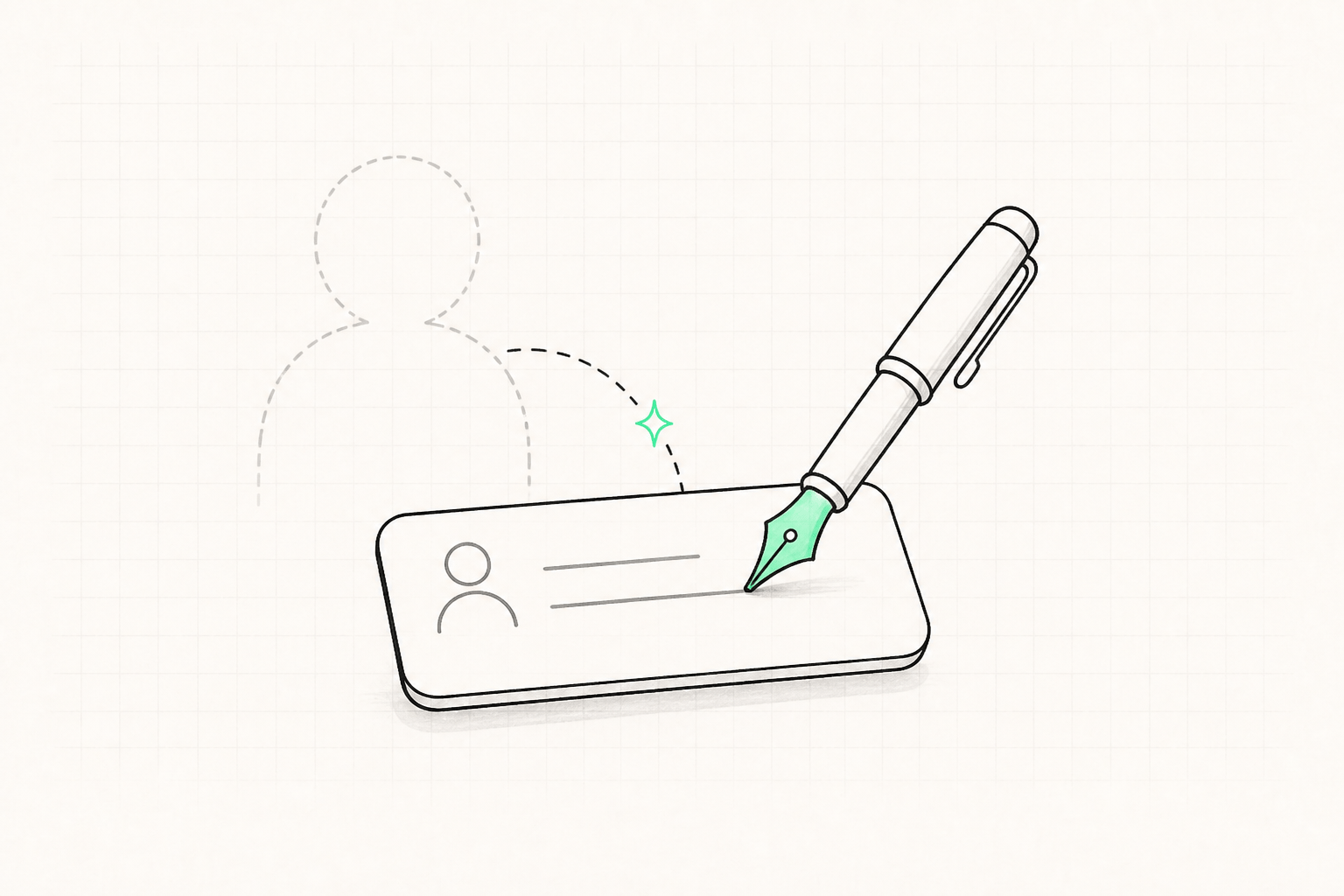
A LinkedIn ghostwriter is a writer who turns your ideas into posts you publish under your own name.
They interview you, learn how you think and speak, then handle the part most people hate: staring at an empty box, structuring a thought, cutting it down, and making the first line good enough that someone stops scrolling.
The ideas stay yours. The typing doesn't.
That's the whole thing. Everything else in this post is detail on how it works, what it costs, and when it's the wrong move.
What a LinkedIn Ghostwriter Actually Does
Most people picture "ghostwriter" and imagine handing over your login. That's not how it works. A real engagement looks like this:
1. A voice intake. They read your existing posts, your emails, maybe a transcript of you talking. They're building a model of your vocabulary, your sentence length, your opinions, and the things you'd never say. This is the step that separates a good ghostwriter from an expensive one who makes you sound like a press release.
2. An idea system. Good ghostwriters don't ask "what do you want to post about?" every week — that puts the hard part back on you. They run a recurring 30-minute call, pull five ideas out of what you did that month, and bank them.
3. Drafting. They write the posts. Usually 2–5 per week, delivered a week or two ahead.
4. Your edit. You read them, change what's wrong, approve the rest. This step is not optional. The ghostwriters who get results have clients who actually edit.
5. Scheduling and publishing. Some handle this, some hand you a doc. If they're publishing, they need access — which is worth thinking hard about.
Note what's missing: they are not a strategist, a designer, or a growth hacker. A ghostwriter writes. If your positioning is unclear, a ghostwriter will write clear posts about an unclear thing.
Who Hires One
In practice, four groups:
- Founders and executives who need to be visible for hiring, fundraising or sales, and whose hour is worth more than the writing.
- Consultants, coaches and agency owners whose pipeline comes directly from being known.
- Sales leaders building trust with a market before the first call.
- Job seekers at senior levels, where visibility shortens a search considerably.
The common thread isn't ego. It's that showing up on LinkedIn compounds, and the thing that kills it is inconsistency — not bad writing.
Ghostwriter vs. AI Ghostwriter vs. Doing It Yourself
There are three real options, and they cost wildly different amounts.
Do it yourself. Free, slowest, and the best for voice — nobody sounds more like you than you. The failure mode is well documented: you post for three weeks, get busy, and stop. Consistency beats craft on LinkedIn, and consistency is exactly what a human calendar destroys.
Hire a human. Typically $1,000–$5,000 a month for a few posts a week. You're paying for their time, their taste, and the fact that they will chase you for material. Best when you have budget, low time, and something genuinely worth saying that you can't get onto the page.
Use an AI ghostwriter. A tool that learns your voice from your samples, drafts from a rough thought, and schedules the result. Costs a fraction of a human — LinkGenie starts free and paid plans run $19–$36/month. The trade: you still supply the raw material and do the final edit. It removes the blank page, not the thinking.
We wrote up the full number breakdown in how much a LinkedIn ghostwriter costs, including the per-post math that makes retainers look better or worse than they first appear.
Is Using a Ghostwriter Cheating?
No, and this question deserves a straight answer because it stops a lot of people.
Every CEO letter you've read was drafted by someone else. Most executive LinkedIn content is ghostwritten. LinkedIn has no rule against it. The platform cares about whether people engage with your post, not who held the keyboard.
The line that actually matters is authorship of the idea. If the opinion is yours, the story happened to you, and you'd defend it in a room — it's your post. If the ghostwriter invented a belief you don't hold, that's not ghostwriting, that's fiction with your face on it. Readers can tell, usually within two posts.
Three Cases Where You Should Not Hire One
1. You don't know what you're trying to say yet. A ghostwriter amplifies a point of view. If you don't have one, you'll spend $3,000 a month on well-written nothing. Spend a month posting badly yourself first — you'll find your angle faster than any intake call will.
2. You won't do the 30-minute call. Ghostwriting dies from client silence. If you can't reliably give someone raw material every couple of weeks, you'll be paying a retainer to write generic filler.
3. Your audience is under 1,000 people and you're pre-revenue. At that stage the constraint is reps, not quality. Post four times a week yourself, learn what lands, and revisit this in six months. Start with how to get more LinkedIn followers for free and the complete LinkedIn content strategy.
What Good Output Looks Like
Whether it's a human or a tool doing the drafting, judge the work on the same four things:
- The first line stops the scroll. LinkedIn truncates around 140–210 characters on mobile. If the hook is buried in line four, the post is dead. (Check your drafts against the cutoff with our free LinkedIn character counter.)
- One idea per post. Not three. Posts that try to cover everything get remembered for nothing.
- A specific, checkable detail. A number, a name, a real moment. Generic advice is the single most common failure of ghostwritten content.
- It sounds like you out loud. Read it aloud. If you'd never say it in a meeting, send it back.
It also has to reach people, which is a separate problem from being good — see how the LinkedIn algorithm actually works for what gets amplified and what quietly gets buried.
The Cheapest Way to Test the Idea
Before committing to a retainer, find out whether ghostwritten posts actually move anything for you. Run a four-week test:
- Bank 12 post ideas from things that actually happened at work.
- Draft all 12 in a single sitting — this is where an AI ghostwriter earns its keep.
- Edit each one until it sounds like you. Budget ten minutes per post.
- Schedule three a week and don't touch anything for a month.
If four weeks of consistent posting produces conversations, inbound, or profile views worth having, you now know the channel works for you — and you can decide whether to scale it with a human or keep running it yourself in 15 minutes a day.
If it produces nothing, you've saved yourself $12,000 a year.
Next Steps
- Want the numbers? How much does a LinkedIn ghostwriter cost
- Ready to hire a human? How to hire a LinkedIn ghostwriter
- Want to try the AI route first? The best AI LinkedIn ghostwriting tools
Or skip straight to it — meet your AI LinkedIn ghostwriter. It learns your voice from your own writing, drafts from a rough thought, and schedules the result. Free to start, no credit card.
FAQ
What is a LinkedIn ghostwriter? A writer who interviews you, learns how you think and speak, and writes posts you publish under your own name. The ideas and opinions stay yours; the drafting, structuring and editing are done for you.
Is using a LinkedIn ghostwriter allowed? Yes. LinkedIn has no rule against getting help writing your posts, and a large share of executive content on the platform is ghostwritten. What matters is that the ideas are genuinely yours.
How much does a LinkedIn ghostwriter cost? Human ghostwriters typically charge $1,000–$5,000 a month for a few posts a week. AI ghostwriting tools cover the drafting for a small fraction of that — see the full cost breakdown.
Do LinkedIn ghostwriters actually work? They work when you feed them real material — opinions, customer stories, lessons from your week. They fail when the client has nothing to say and expects the writer to invent a point of view.
Can a ghostwriter post for me? Some do, which requires giving them account access. The safer pattern is drafting plus scheduling through LinkedIn's official API, so nothing depends on shared passwords — that's how the LinkGenie scheduler works.